Launch and Forget: The Institutional Amnesia Behind Your Worst Business Calls

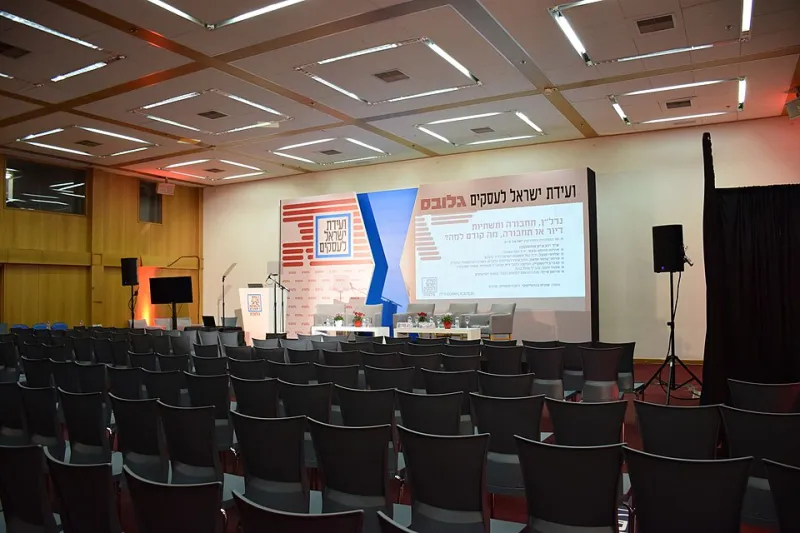
Photo: empty modern boardroom conference table after meeting, via img.freepik.com
Every quarter, thousands of American companies make decisions that will determine their trajectory for years: a product line sunset, an acquisition bid, a market entry, a reorganization. And every quarter, almost none of those companies sit down afterward to systematically examine whether the decision was made well.
This is not a knowledge problem. Executives know what a post-mortem is. The military has run after-action reviews for decades. Aviation safety was rebuilt on the discipline of dissecting every incident. Yet in the corporate world, the practice remains rare, optional, and — when it does happen — usually reserved for spectacular failures, conducted in a tone of blame management rather than genuine inquiry.
The result is institutional amnesia. Organizations repeat the same decision-making errors with new faces and new vocabulary, then wonder why the last transformation produced the same outcomes as the one before it.
Fireworks, Not Instruments
Most companies treat decisions the way cities treat fireworks: there is a launch, there is a spectacle, there is applause or groans, and then everyone goes home. Nothing is measured afterward except the emotional residue.
The irony is that the same organizations will run rigorous retrospectives on software releases and marketing campaigns. A failed email sequence gets a root-cause analysis. A failed $40 million market entry gets a shrug and a leadership transition.
The asymmetry is telling. Small decisions get scrutinized because they are emotionally cheap to examine. Big decisions get protected because too many senior reputations are embedded in them. Which means the decisions with the greatest learning value are precisely the ones the organization refuses to study.
What a Decision Autopsy Actually Is
A decision autopsy is not a post-mortem in the software sense, which typically examines an outcome. It examines the process — the information available at the time, the alternatives considered, the dissent that was voiced or suppressed, the assumptions that were never tested.
The distinction matters because good processes periodically produce bad outcomes, and bad processes periodically produce good ones. A company that only studies failures will punish sound judgment that ran into bad luck. A company that only celebrates wins will promote luck and call it skill. Autopsying the process is the only way to tell the difference.
The framework is deliberately simple:
1. Reconstruct the decision as it was seen at the time. What did the team know? What did they believe? What options were on the table and why were they rejected? This must be done from contemporaneous documents, not memory. Memories quietly rewrite themselves to flatter the rememberer.
2. Identify the decision quality, separate from the outcome. Was the analysis sound? Was the right data weighted correctly? Was dissent solicited from people with relevant knowledge, or only from people with relevant seniority?
3. Name the process failures explicitly. Not "we should have known" — hindsight is a liar — but "we had no mechanism to hear from frontline staff," or "we set a deadline that made debate impossible."
4. Convert findings into one changed behavior. Not a memo. Not a training. One concrete modification to how the next comparable decision gets made.
Who Should Be in the Room
Attendance is where most post-mortems die. Put the decision-maker in charge and you get a performance. Put their subordinates in charge and you get silence.
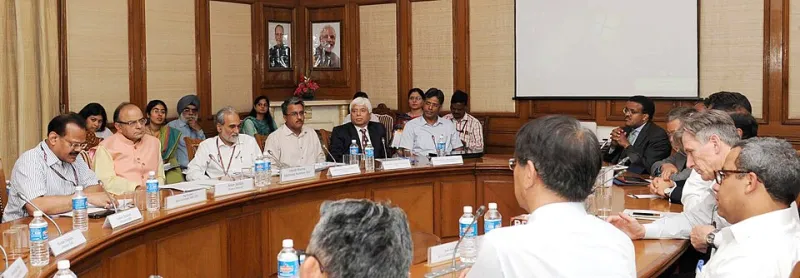
The workable arrangement is a facilitator who did not participate in the decision, plus a cross-section of people who touched it: the sponsor, at least one vocal skeptic, and someone who holds institutional memory of the last time the organization tried something similar. Seniority should be checked at the door — which is easier to say than to do, and the reason the facilitator needs genuine standing.
Keep the room small. Six to eight people. Larger groups produce consensus theater; smaller groups produce conversation.
Keeping Blame Out of the Room
The phrase "blameless post-mortem" has become something of a cliché, but the underlying principle survives the cliché: people cannot tell you what they actually believed if they think their honesty will appear in someone's performance review.
Three practices help. First, separate the autopsy from any compensation or promotion process by explicit, announced policy. Second, have the facilitator reframe every "why did you" question into "what did we know at the time that led us to." Third, write the findings about systems and incentives, not individuals — if a person's name appears in the recommendations, the document has failed.
This is not about being gentle. It is about being accurate. Blame narrows the search for causes to the point where the real ones escape.
Autopsy the Wins, Too
The most underused version of this practice is the success autopsy. When an initiative outperforms, teams celebrate and move on, taking the credit at face value. But wins conceal as many process failures as losses — sometimes a decision was right for the wrong reasons, and the organization just learned a dangerous lesson.
Ask the same questions after a triumph: What did we believe? What did we get lucky on? Which parts of this are repeatable and which were a favorable market doing the heavy lifting? Companies that ask these questions compound their judgment. Companies that don't are simply gambling with better branding.
The Competitive Case
There is a straightforward argument for making decision autopsies routine: your competitors probably won't. The discipline costs a few hours per major decision, requires no software, and improves the one asset that never depreciates on the balance sheet — the quality of executive judgment.
Decisive leaders like to say they learn from failure. Very few have built the machinery that makes learning possible. The difference between the two is not philosophy. It is a standing meeting, a facilitator, and the willingness to open the file on last quarter's victory.