The Meeting Purge: Seven Recurring Events to Kill Before Q-End
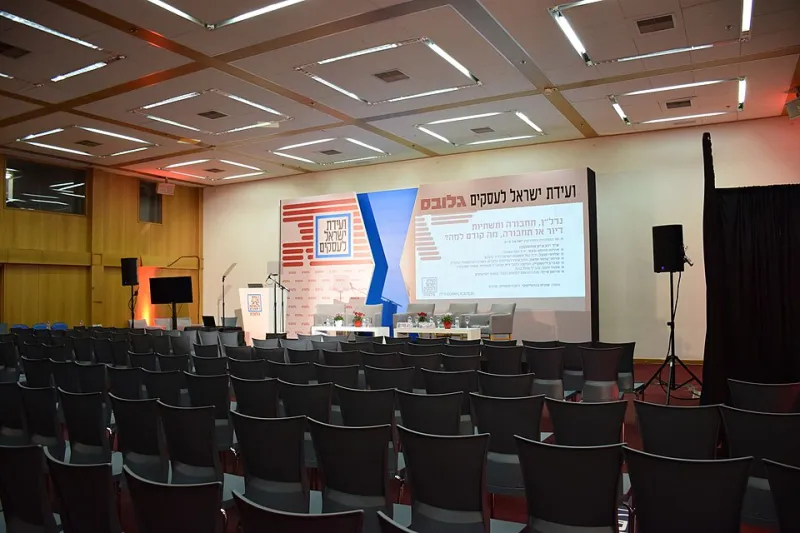
Photo: Arielinson, CC BY-SA 4.0, via Wikimedia Commons
Let me say the quiet part loudly: most of your recurring meetings are not work. They are performances of work, scheduled in thirty-minute increments, attended by people who would rather be doing the thing being discussed. And in an era when four-day-week pilots are spreading through American companies and AI tools are quietly absorbing the busywork of summarization, the cost of that performance is harder than ever to justify.
So here is my proposal for the quarter ahead: a purge. Seven recurring meeting formats, each with a replacement that is cheaper, clearer, and more respectful of everyone's decision-making capacity.
1. The Status Update Nobody Reads
The weekly all-hands-style status meeting survives on inertia. Nobody attends for the information; they attend in case they're called on.
Replace with: A written update in a shared channel or doc, posted on a fixed cadence. Written status forces clarity, creates a searchable record, and lets people skim at their own pace. If a status update can't survive being written down, it was never a status — it was a conversation, and conversations belong where they can be scheduled deliberately.
2. The Alignment Call That Creates Misalignment
"Let's get everyone on the same page" meetings, held after decisions have already been made elsewhere, reliably produce the opposite. Twenty people hear the same words and leave with twenty interpretations, because alignment was treated as an announcement rather than a process.
Replace with: A decision document circulated for asynchronous comment with a 48-hour window. Objections in writing are sharper, braver, and far more useful than the polite nodding of a conference room.
3. The Recurring 1:1 That Became a Calendar Placeholder
One-on-ones are sacred — until they aren't. When the agenda dissolves into small talk and project recaps that could live in a doc, the meeting has become a habit, not a tool.
Replace with: Keep the 1:1 but restructure it: agenda submitted by the report in advance, or cancel that week with no guilt. A skipped meeting with nothing to discuss is a sign of health, not neglect.
4. The Daily Standup for a Team That Isn't Building Daily
Standups were designed for co-located engineering teams shipping in short cycles. Applied to a marketing department or a finance team, they become a daily tax on concentration for updates that change roughly never.
Replace with: A threaded daily check-in in your team tool, or nothing at all for roles whose work moves on weekly rhythms.
5. The 'Working Session' With No Work
Someone books ninety minutes, invites a dozen people, and titles it "working session" in the hope that the title will do the work. It doesn't. What follows is a presentation with extra steps.
Replace with: A pre-read plus a tight 25-minute decision meeting — or, better, a shared document where the actual work happens in comments before anyone's calendar is touched.
6. The Post-Mortem That Becomes a Eulogy
Retrospectives drift. The project is over, the team is scattered, and the meeting becomes a gentle autopsy where the lessons are generic and the accountability is nowhere.
Replace with: A written retrospective template completed within five days of launch, with each contributor assigned one specific lesson and one specific change. Async, dated, and reviewed at the start of the next project — not filed into a wiki abyss.
7. The Monthly Review of Metrics Everyone Can See
If your dashboard works, a meeting to read it aloud is theater. If your dashboard doesn't work, the meeting is a symptom.
Replace with: Automated reporting delivered to the team, with the meeting reserved exclusively for anomalies — the numbers that moved in ways someone can't explain. Anomaly review is where judgment lives. Reading numbers aloud is where hours go to die.
What You Do With the Time
A purge like this typically returns four to six hours per manager per week. That is not a perk; it is capacity. It is the deep work your strategy deck keeps promising and your calendar keeps denying. American companies experimenting with compressed workweeks have learned this quickly: you cannot shorten the week without shortening the meeting load, because meetings are the first thing that turns forty hours of work into five days of exhaustion.
The leaders I respect most treat their calendar the way they treat their budget — as a finite resource allocated with intent. Every recurring meeting is a standing expense. This quarter, audit the expense line. Cancel ruthlessly, replace deliberately, and reinvest the recovered hours in the decisions only you can make.
Your team won't miss the meetings. They'll miss them even less than you think.