The Tool Is the Blueprint: Auditing the Organization Your Software Built
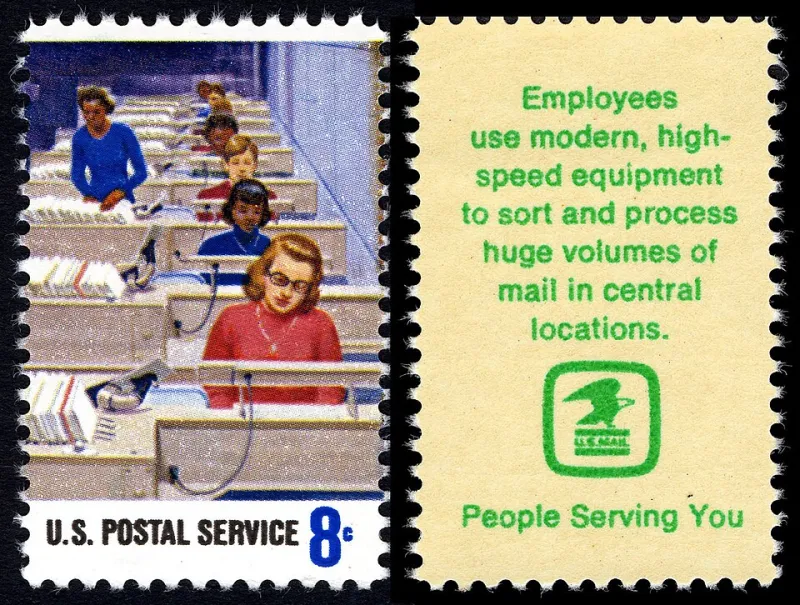
Photo: Bureau of Engraving and Printing. Designed by Edward Vebell., Public domain, via Wikimedia Commons
Every executive can describe the org they intended to build. Far fewer can describe the org their software built for them.
Consider the pattern, familiar at companies across the American mid-market and beyond: a team renames itself to match a Slack channel because that is how cross-functional partners find them. A product manager's remit quietly expands — or contracts — because the CRM has a field for it, or doesn't. A quarterly review process hardens around whatever the BI dashboard can display, so the metrics leadership never chose to prioritize become the metrics everyone optimizes. Nobody made these decisions in a conference room. They happened in configuration menus.
This is not a story about technology going wrong. It is a story about technology going unexamined.
How Defaults Become Doctrine
Software vendors design for the median customer, and the median customer's workflow gets baked into the product as the path of least resistance. Default views, pre-set hierarchies, required fields — each one is a small act of organizational design performed by someone who has never met your team.
The trouble is friction. Reconfiguring a tool takes an afternoon; reshaping a department to fit the tool takes a year, and it happens one reasonable accommodation at a time. A VP asks sales to log calls a certain way because the pipeline report depends on it. Soon the call structure itself changes, because nobody holds a conversation that doesn't fit the form. Multiply this across a dozen platforms and you get an organization that is, in a meaningful sense, the output of its vendor stack.
There is a name for the reverse error, and executives know it well: the failed implementation, where software is forced onto a resistant org. The subtler failure — the org that surrenders without a fight — rarely makes the postmortem pile because nobody notices it happening.
The Intentionality Audit
Leaders who suspect their structure has drifted into vendor-defined territory can run a disciplined audit in three passes.
First, inventory the imposed structures. List every team name, role boundary, reporting cadence, and process step that exists primarily to serve a system: the channel taxonomy, the CRM stage definitions, the dashboard's available filters. For each, ask a blunt question — if we were designing this company from a blank page, would this exist in this form? Anything answering "no" lands on the drift list.
Second, trace the lineage. For each item on the drift list, identify the decision that created it. Often there isn't one — just a default inherited during onboarding, or a workaround from a departed admin that ossified into policy. Distinguishing between "leadership chose this" and "the tool suggested this" is the entire point of the exercise.
Third, price the mismatch. Not every default is worth fixing. But some are expensive: the reporting structure that forces a matrix nobody wanted, the pipeline stages that reward premature deal advancement, the channel-based teams that fragment accountability. Quantify where you can — rework, cycle time, headcount spent reconciling systems — and rank the rest by strategic cost.
Reclaiming the Design Authority
The corrective is not a massive replatforming. It is the reassertion of a simple principle: structure is a leadership decision, and tools should be configured to serve it, not the other way around.
In practice, that means writing down your intended operating model — teams, handoffs, decision rights — before touching any admin panel, then configuring systems to match. It means treating vendor defaults as proposals, not ground truth, and assigning a named owner to each platform's configuration the way you would assign an owner to a budget line. It means scheduling a periodic review, perhaps annually alongside planning, where the question "does our software still describe the company we want to be?" gets a serious answer.
Some organizations go further, running what one might call a blank-page exercise: describe the ideal operating model with no reference to current tooling, then measure the gap. The gap itself is diagnostic. A small one suggests healthy alignment. A large one suggests the tail has been wagging the dog for some time.
The Deeper Point
None of this is an argument against management software, which has earned its place in the modern enterprise many times over. It is an argument about sovereignty. The companies that get the most from their tools are the ones that remember which entity is serving which — and that a channel name, a required field, or a default dashboard is never just a technical detail. It is a small vote about how the organization should work.
Cast those votes deliberately, or the vendors will keep casting them for you.