Paper Champions: How the RFP Rewards the Wrong Kind of Excellence
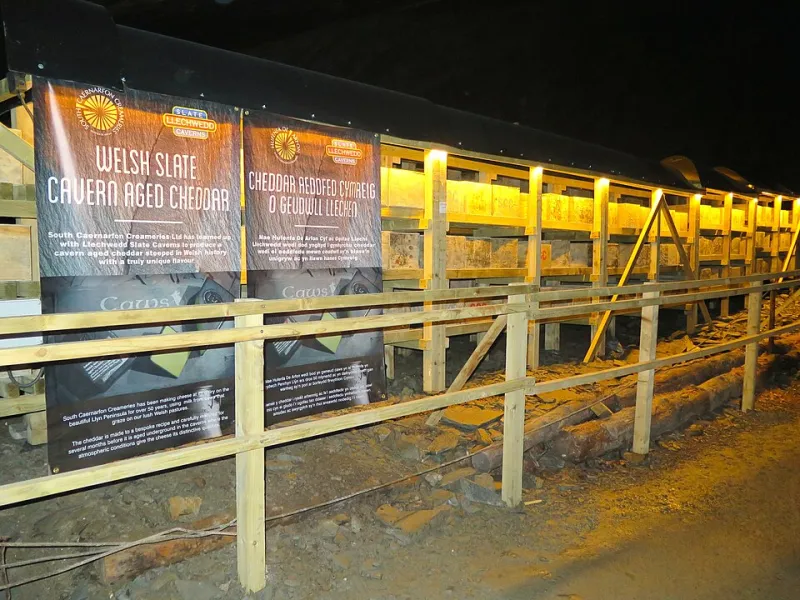
Photo: National Assembly for Wales from Wales, CC BY 2.0, via Wikimedia Commons
Somewhere in your organization right now, a committee is scoring a two-hundred-page proposal. The font is consistent. The executive summary sparkles. Every requirement from your matrix is addressed, cross-referenced, and color-coded. There is only one problem: nothing in that document proves the vendor can actually do the work.
The request for proposal was designed as a safeguard — a way to keep procurement honest, competitive, and defensible. In practice, it has drifted into something closer to theater. The vendors who advance are rarely the ones with the strongest delivery teams. They are the ones with the strongest proposal teams. And those are frequently different people entirely.
The Writing Contest Nobody Meant to Host
Consider what an RFP actually measures. It measures the ability to parse a requirements document, mirror its language back, and produce polished prose under deadline. Those are real skills — for a technical writer. They correlate only loosely with the skills that determine whether a systems implementation finishes on time or a managed services contract delivers value in year two.
Large vendors understand this perfectly, which is why they employ dedicated proposal shops that do nothing but respond to RFPs. They win the paper game at industrial scale. Smaller vendors with exceptional practitioners but no proposal department lose by default, no matter what they might accomplish in the field.
The result is a market that systematically rewards the wrong excellence. Your scoring rubric becomes a filter for marketing maturity, not operational capability. And because everyone in procurement knows the rules of the game, the whole exercise inflates: longer documents, more appendices, more boilerplate — none of it adding a single piece of information you can trust.
What Proposals Can't Tell You
A proposal is a promise made before any consequences exist. It is written by people who may never touch your account, reviewed by lawyers who optimize for liability rather than accuracy, and approved by executives whose primary involvement ends at the signature page.
Three things a proposal will almost never reveal:
- How the team handles ambiguity. Every real project encounters requirements nobody anticipated. A document can claim adaptability; only a live interaction can demonstrate it.
- Who actually does the work. The proposal showcases your future. The org chart decides it. Senior people who appear in the pitch frequently vanish after the kick-off meeting.
- What happens when something breaks. Every vendor is wonderful in the happy path. Character — corporate and otherwise — shows up only under stress.
If your evaluation process never creates stress, never surfaces ambiguity, and never puts the delivery team in front of you, then you have learned nothing that a brochure couldn't have told you.
Restructuring the Evaluation Around Evidence
None of this means abandoning structured procurement. It means rebalancing the weight of evidence away from documents and toward demonstration. Three substitutions do most of the work.
First, replace the scripted demo with a live problem-solving session. Give shortlisted vendors a real, current, unsolved problem from your business — not a sanitized case study — and pay them a stipend for a half-day working session. Watch what happens. Strong teams ask sharp questions, challenge your framing, and reason out loud. Weak teams retreat to slide decks. The contrast is usually obvious within the first hour.
Second, conduct reference deep-dives instead of reference calls. A fifteen-minute courtesy call yields platitudes. Instead, ask each reference for the project that went wrong. What failed? How did the vendor respond? Who showed up? Better yet, ask for a reference from a project that was canceled — how a vendor behaves when revenue disappears tells you more than any success story.
Third, buy a trial before you buy the program. For anything substantial, structure a paid pilot with real deliverables, a firm endpoint, and pre-agreed criteria for continuation. Yes, it costs more upfront. It costs dramatically less than a three-year contract built on two hundred pages of unverified prose.
A Capability-First Scoring Framework
For leaders ready to rebuild their rubric, a simple rebalancing works:
- Written proposal — 20%. Enough to confirm the vendor can communicate and comply. Not enough to let polish decide the outcome.
- Live working session — 35%. Scored on the quality of questions asked, the candor of the reasoning, and how the actual delivery team performs — not the sales team.
- Reference deep-dives — 25%. Weighted toward failure stories and canceled projects.
- Trial engagement results — 20%. Evaluated against criteria set before the trial begins, not after.
Notice what this framework deliberately does: it makes the paper the smallest input and the demonstrated behavior the largest. It also changes vendor incentives. Firms that invest in delivery capability start beating firms that invest in proposal machinery — which is, presumably, the market you thought you were buying into.
Defensible and Decisive
The most common objection from procurement teams is auditability: a structured document process is defensible if anyone ever asks why a vendor was chosen. This is a legitimate concern with a straightforward answer. A documented live session, scored against published criteria, with named evaluators, is at least as defensible as a rubric applied to marketing documents. Evidence of demonstrated capability is stronger evidence, not weaker.
The deeper objection, of course, is inertia. RFPs are familiar. Everyone knows how to run one. But familiarity is not a selection criterion, and the cost of choosing the wrong vendor — measured in delayed projects, rework, and executive attention — dwarfs the discomfort of changing the process.
The RFP was invented to make procurement honest. It has instead made it performative. Leaders who want better outcomes should stop grading the writing and start watching the work. The best vendors will thank you. The paper champions, one suspects, will find another audience.